The gist
Pakistan offers two routes for a document going abroad. One MOFA apostille replaces the embassy step where the destination accepts it. Otherwise the file needs MOFA attestation and then the embassy stamp, and the country rule fixes the choice, not preference.
The question that decides your route
Your route is decided by the destination country, not by the document and not by preference. Every Pakistani document that moves abroad passes through MOFA. What happens after MOFA depends on one fact, namely whether the destination accepts a Pakistani apostille.
If it does, the MOFA apostille is the final stamp and the file is done. If it does not, the document needs MOFA attestation followed by the destination embassy. Choosing the wrong route means paying for a step you did not need, or arriving at an embassy with a document that still lacks a required stamp.
The two stamp sequences, side by side
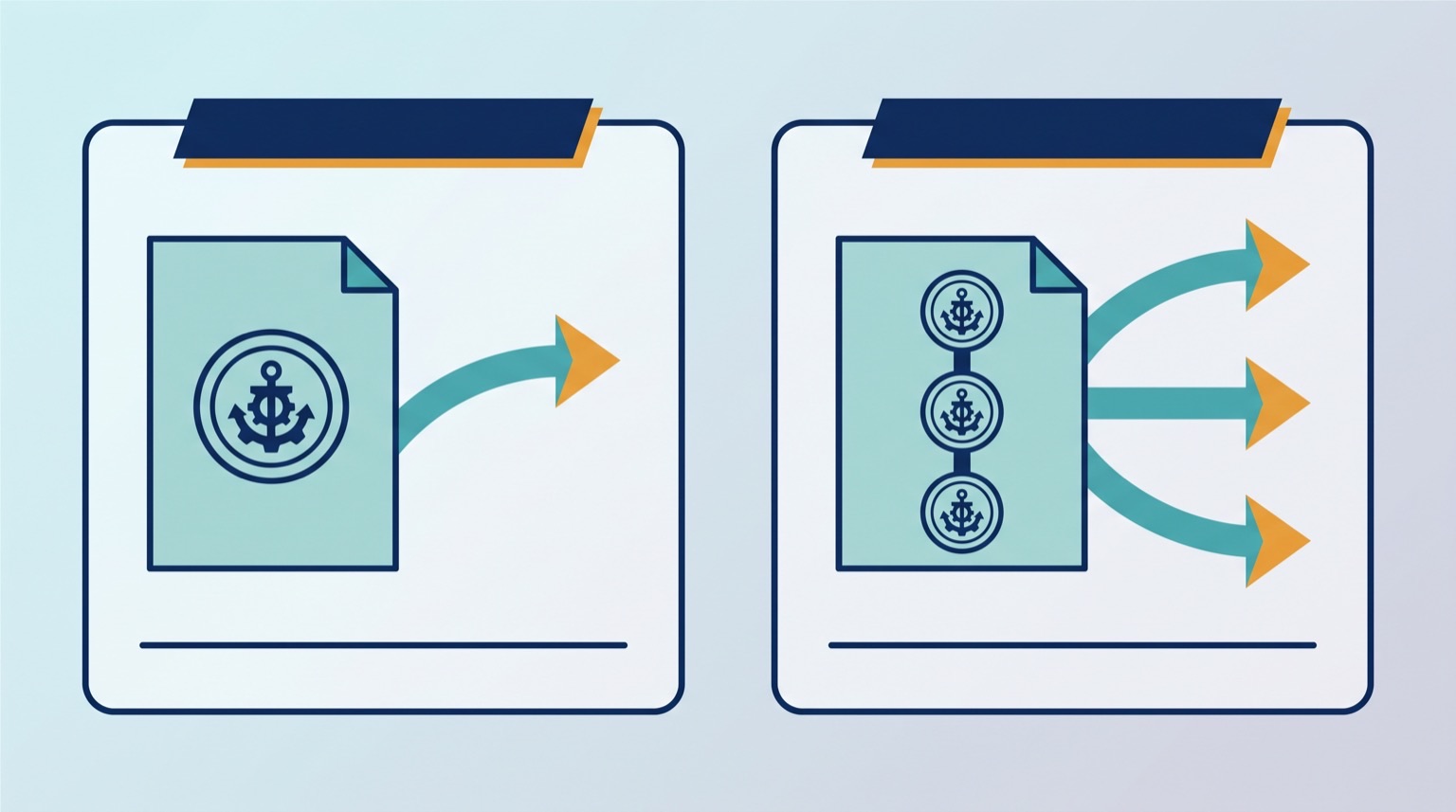
Both routes start the same way. The document is first attested by the Pakistani authority that applies to it, such as HEC for a degree, IBCC for a board certificate, NADRA for a civil record, or the police office for a character certificate. The routes then split at MOFA.
| Stage | Apostille route | Embassy route |
|---|---|---|
| 1. Prior attestation | By the issuing authority | By the issuing authority |
| 2. MOFA | Issues the apostille certificate | Attests the document |
| 3. Embassy | Not needed | Destination embassy stamps the file |
| Result | Ready for the destination | Ready for the destination |
The apostille replaces the embassy step, nothing else. It does not replace HEC, IBCC, or NADRA attestation, and it does not remove the need for a separate evaluation or licence where the receiving authority asks for one.
Where the apostille works

Pakistan joined the Hague Apostille Convention in 2022, and Pakistani apostilles have been valid since 9 March 2023. The Convention now has 130 contracting parties, and Pakistani apostilles are accepted by nearly all of them, including Saudi Arabia, Oman, Bahrain, the United Kingdom, Canada, the United States, Australia, Turkey, and China.
- Saudi Arabia, Oman, Bahrain (Saudi Arabia guide, Oman guide, Bahrain guide)
- United Kingdom, Canada, United States, Australia (UK guide, Canada guide)
- China, Turkey (China guide, Turkey guide)
Membership changes. Algeria joined in 2025, Viet Nam and Thailand followed in 2026, and the total keeps growing, so the current HCCH status table is the only safe source for a destination you have not filed before.
Where a Pakistani apostille stops working
Two groups of countries do not accept a Pakistani apostille.
India. India is a party to the Convention, but the Convention does not apply between Pakistan and India. Pakistan entered a declaration that excludes India, so a Pakistani apostille is not valid there. India files use the embassy route and need case-by-case confirmation.
The objecting states. Austria, the Czech Republic, Denmark, Finland, Germany, Greece, the Netherlands, and Poland objected to Pakistan's accession under Article 12(2) of the Convention. The Convention is not in force between Pakistan and each of these states, so a Pakistani apostille is not accepted there. Each of these countries has its own route. Germany's embassy does not attest or legalise Pakistani-issued public documents, the Netherlands directs Pakistani documents to the MOFA legalisation route because it does not recognise a Pakistani apostille, and Poland's consul in Islamabad legalises Pakistani documents directly.
The Saudi case and its separate route
Saudi Arabia is a member and accepts the apostille, yet the embassy route remains common there. Saudi Cultural attestation, called Mosadaqa, is a separate authority, and since 25 December 2025 Mosadaqa has been mandatory for employment, professional registration, and SCE applications. Which route a Saudi file needs depends on the employer and the receiving office. See the Saudi embassy service page for both routes.
Time and cost, route by route
Both routes start with the same prior attestation, so the difference is one MOFA step against one MOFA step plus an embassy. The apostille route is faster because it ends at MOFA. The embassy route adds embassy scheduling, embassy hours, and the embassy's own charge on top of the MOFA fee. We confirm the route and give a written quote before anything is filed, so the fee reflects the steps your case needs.
The order mistakes that waste a filing
The steps have a fixed order, and most failed filings come from breaking it.
- Skipping the prior attestation. The apostille does not replace HEC, IBCC, or NADRA attestation. It replaces the embassy step only.
- Paying for an embassy step on an apostille route. For member destinations there is no embassy step, and adding one is unnecessary.
- Assuming the apostille works for the UAE, Qatar, or Kuwait. These are not members, so the embassy route applies.
- Assuming the apostille works for Germany, the Netherlands, or Poland. Their objections mean the Convention is not in force with Pakistan, and those files are handled per case.
- Trusting an old member list. Accessions change the map, and a country that did not accept Pakistani apostilles last year may accept them now.
You do not need to run these checks alone. Send the document details and destination, and we confirm the exact sequence with a written quote before anything is filed.
Sources
- HCCH Apostille Convention status table covering contracting parties, membership and objections, checked 12 August 2026
- MOFA apostille service pages listing Convention countries and public documents, checked 12 August 2026
- HCCH notifications on Pakistan accession and the Article 12(2) objections, checked 12 August 2026
Frequently Asked Questions
Is apostille valid in the UAE?
Does apostille replace embassy attestation?
Which countries need apostille from Pakistan?
Is apostille valid in Germany?
What is the current MOFA apostille timeline from Pakistan?

About Sannan Siddique
Sannan Siddique is the founder and CEO of Attestdone. He spent about ten years in logistics and compliance in the Gulf before returning to Pakistan, where he built Attestdone around written quotes, tracked document handling, and staff who file at the authorities themselves.
View author profile →On this page
- The question that decides your route
- The two stamp sequences, side by side
- Where the apostille works
- Where a Pakistani apostille stops working
- The Saudi case and its separate route
- What the receiving authority wording tells you
- Time and cost, route by route
- The order mistakes that waste a filing
- Sources
Want someone to handle the filing?
We run the attestation or apostille from your doorstep.
Get a Quote