In brief
Two authorities share Pakistan's education documents by level. HEC takes university degrees and transcripts, IBCC takes school and board certificates, and one overseas application can span both.
The document level decides
Choose the authority by the level of the document. A university degree or transcript goes to HEC. A Matric, Intermediate, or technical-board certificate goes to IBCC, after verification by the board that issued it.
The two are not interchangeable. HEC does not replace IBCC for school certificates, and IBCC does not attest university degrees. If a receiving university, employer, or immigration office asks for several education levels, one file can legitimately need both authorities.
Routing each document to its authority
| Document | Authority | Before the authority |
|---|---|---|
| SSC / Matric certificate | IBCC | Issuing board verification |
| HSSC / Intermediate certificate | IBCC | Issuing board verification |
| Technical board certificate or diploma | IBCC | Issuing BTE or board verification |
| Bachelor's degree and transcript | HEC | HEC and institution requirements |
| Master's, MPhil, PhD documents | HEC | HEC and institution requirements |
| Cambridge or Edexcel O / A Level results | IBCC equivalence, not attestation | Statement of results from the board |
Board verification comes before IBCC
IBCC requires the issuing board to verify the certificate before IBCC attestation. Board verification is the board confirming that it issued the certificate. BCC attestation is the national commission confirming the verified document. They are two steps, and skipping the first means the second cannot proceed. The board verification is arranged with the BISE or BTE that issued the certificate, and the verified record is then submitted to IBCC through its current submission modes.
Attestation and equivalence answer different questions
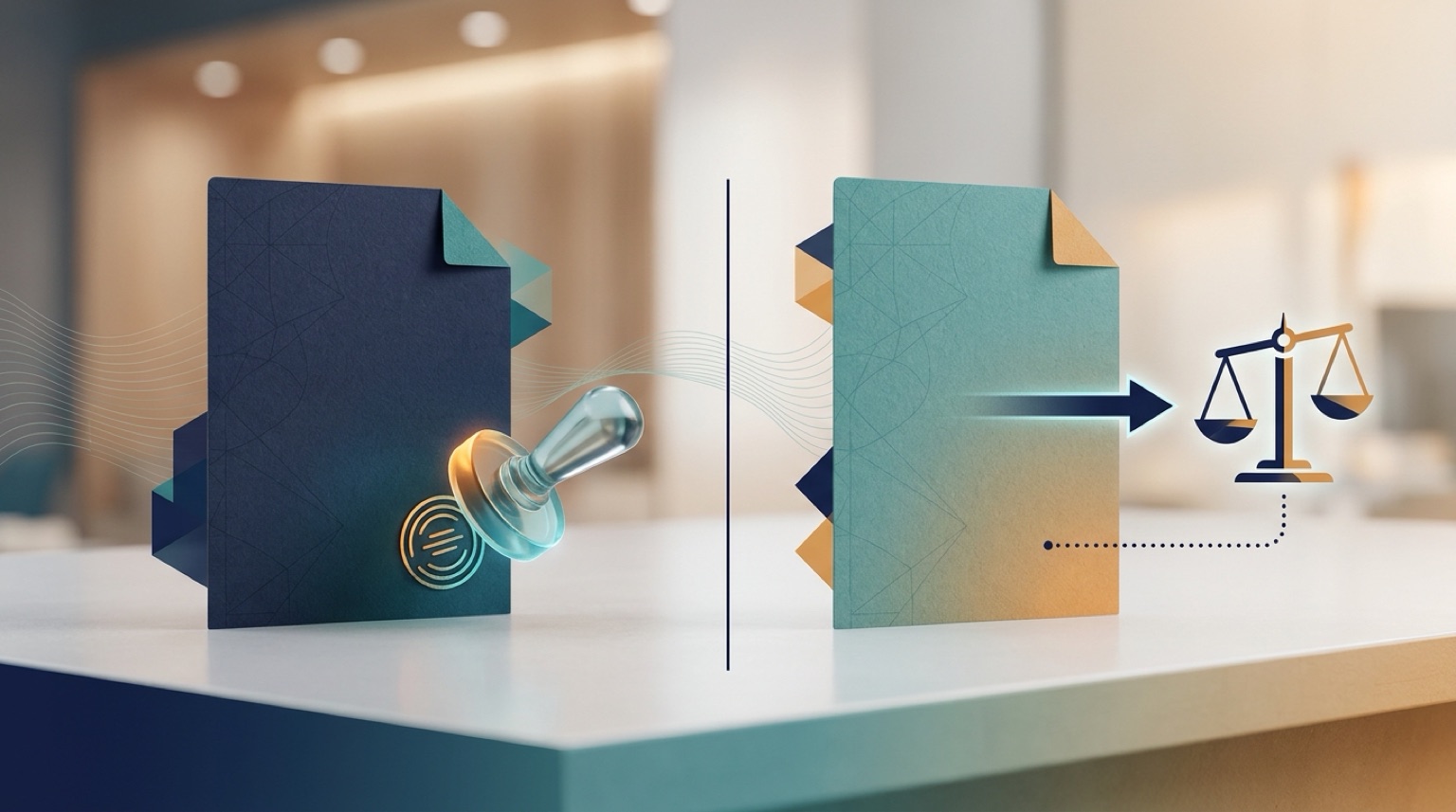
Attestation confirms that a document is genuine. Equivalence maps a qualification from one education system to another for a defined purpose.
The confusion shows up most often with Cambridge and Edexcel qualifications. A student who passed O and A Levels abroad may need an IBCC equivalence certificate so a Pakistani institution or employer understands the local equivalent. That is a different product from IBCC attestation, which applies to Pakistani board certificates.
Read the receiving institution's wording carefully. If it asks for an attested certificate, an equivalence certificate alone does not satisfy the request. If it asks for equivalence, an attestation stamp does not provide the conversion it needs. See IBCC equivalence assistance.
When one file needs both
Both appear in one file when the receiving authority asks for a complete education history. A graduate applying overseas might send the university degree and transcript through HEC while also sending Matric and Intermediate certificates through IBCC. The two authorities are handling different documents, not duplicating the same job.
Do not assume every HEC application needs IBCC-attested school certificates, or that every visa needs both. The receiving organisation's checklist controls the document set. Send the exact checklist, document names, and destination before filing, so the file is separated into the HEC documents, the IBCC documents, and the board verification steps the file needs.
After HEC or IBCC, the destination route
HEC or IBCC attestation is the originating-authority step, not the final one. The next step depends on the destination. A country that accepts a Pakistani apostille needs the MOFA apostille, and a country outside that route needs MOFA attestation followed by the embassy. For Canada, an educational credential assessment such as WES is a separate requirement on top of HEC attestation. See apostille versus embassy attestation for the destination decision.
Sources
- IBCC attestation FAQs on scope of attestation and board verification, checked 12 August 2026
- HEC Degree Attestation System, checked 12 August 2026
- IBCC requirements for attestation, checked 12 August 2026
- IBCC submission modes, checked 12 August 2026
Frequently Asked Questions
Does HEC attest Matric and Intermediate certificates?
Does IBCC attest a Bachelor degree?
What is the difference between HEC and IBCC?
Do I need both HEC and IBCC?
What does IBCC equivalence provide that attestation does not?

About Sannan Siddique
Sannan Siddique is the founder and CEO of Attestdone. He spent about ten years in logistics and compliance in the Gulf before returning to Pakistan, where he built Attestdone around written quotes, tracked document handling, and staff who file at the authorities themselves.
View author profile →